The Immersive Classroom
  • Home
  • About
  • Lessons
    • Teaching with Music >
      • Song warm-up lesson plans, setup, procedure, and exams
      • How to teach "Tú sí sabes quererme" by Natalia Lafourcade
      • How to teach "La Carretera" by Prince Royce
      • How to teach "Latinoamérica" by Calle 13
      • How to teach "Prohibido Olvidar" by Rubén Blades
      • How to teach "Traidora" by Gente de Zona
      • How to teach "La Bicicleta" by Shakira and Carlos Vives
      • How to teach "Culpa al Corazón" by Prince Royce
      • How to teach "Déjà Vu" by Prince Royce and Shakira
      • How to teach "Amor de Mis Amores" by Natalia LaFourcade
      • How to teach "Despacito" by Luis Fonsi and Daddy Yankee
    • Teaching with TPRS >
      • Using TPRS in the World Language Classroom
      • Valentine's Day Lesson
    • Teaching with Tech >
      • Why Duolingo
      • Duolingo In Curriculum
    • Teaching with Film >
      • Rebelión en Oaxaca: Film Resource
      • Blossoms of Fire - A Film Resource
    • Teaching Social Justice >
      • Problems and Solutions in Our Baltimore Community
      • Resources for teaching students about the Oaxacan Uprising of 2006
  • Service Learning
    • The Advocacy Project >
      • Teaching Social Justice: My Background and Context
      • Inspiration for "The Advocacy Project"
      • Providing opportunities for volunteering during "The Advocacy Project"
      • How are students graded while participating in "The Advocacy Project"?
      • Student Reflections on "The Advocacy Project"
  • Travel
    • Cuba >
      • Pedro Pablo Oliva and "The Great Blackout"
      • Patio del Pelegrín Community Project
      • El Tanque - Casa Cultural Comunitaria
      • A Lecture with Cuban Academic Jorge Mario Sánchez Egozcue
    • Mexico >
      • Oaxaca: Mazatec and the language of whistling
      • Oaxaca: Monte Albán and a Oaxacan lunch
      • Oaxaca: Monte Albán and Atzompa
      • Oaxaca: Yanhuitlan
      • Oaxaca: Danza de las Plumas in Teotitlán del Valle
    • Spain >
      • Madrid
      • Sevilla
      • Feeling at home
  • Resources
  • Tutoring
  • Blog
  • Contact

Updates

Presenting at the LALISA Conference

4/11/2018

0 Comments

 
Picture

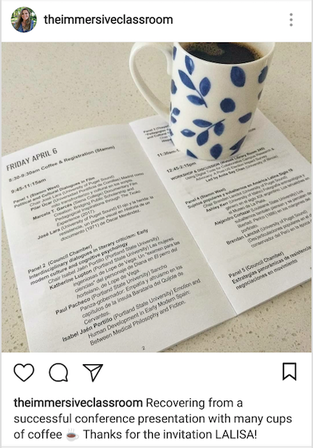
​I had quite an interesting weekend, and I'd love to tell you a bit about it. I spent this past Friday and Saturday at the LALISA conference hosted at the beautiful Lewis and Clark College in Portland, Oregon. LALISA (Latin American, Latino, and Iberian Studies Association of the Pacific Northwest) is a group of scholars that presents their investigations into various literary, anthropological and cinematic themes at an annual conference hosted by the group. I was invited to present, and chose to share an investigation that I had completed during my fall term at Portland State University. In this investigation I delved into the work of Lope de Vega, Spain's  prolific playwright of the Golden Age, and took a close look his brilliant 1615 play, El perro del hortelano.

In my investigation, entitled "Las mujeres ingeniosas de Lope de Vega: Un 'examen para las ciencias' del personaje de Diana en El perro del hortelano de Lope de Vega", I analyzed the strong female lead, Diana, in one of Lope's well known plays, The Dog in the Manger. In my investigation I argue that Diana, the play's fearless and headstrong female lead, could in fact have been classified with a "sanguínea" temperament, rather than the "flemática" classification that she would have been afforded at the time that Lope's play was published in 1615.

Throughout the investigation, I compare the play with the Examination of Men's Wits, the scientific treatise written by Juan Huarte de San Juan in 1575 and widely circulated during Lope de Vega's time. This treatise describes the four possible temperaments (sanguíneo, flemático, colérico and melocólico), but interestingly, the only temperament afforded by Huarte to the women of the time was the "flemático" temperament, which hardly describes the headstrong Diana, the Countess of Belfor.

If you haven't yet had a chance to read Lope de Vega's brilliant play El perro del hortelano, you should really take a look! And don't forget to view the gorgeous 1996 film El perro del hortelano by director Pilar Miró. Miró's unique vision for the bold female lead of Diana is unforgettable. This weekend was such an enlightening and fascinating experience - I can't wait for next year's conference. 
0 Comments


Leave a Reply.

    HEY THERE! NICE TO MEET YOU!

    Picture

    I'm Katherine Lupton: language teacher and author. I live in the lovely state of Oregon. My favorite things include my energetic dogs, music and books (both reading and writing them).

    ​
    Learn more. --> 


    Subscribe

    Blogs I follow
    (and you should, too!)


    ​Creative Language Class
    Cynthia Hitz
    ​El Mundo de Birch
    Fluency Matters
    ​Kristy Placido
    ​Martina Bex

    ​Somewhere to Share
    ​
HOME
ABOUT
BLOG
CONTACT

Visit My Teachers Pay Teachers Store

This website is a participant in the Amazon Services LLC Associates Program, an affiliate advertising program designed to provide a means for us to earn fees by linking to Amazon.com and affiliated sites.
  • Home
  • About
  • Lessons
    • Teaching with Music >
      • Song warm-up lesson plans, setup, procedure, and exams
      • How to teach "Tú sí sabes quererme" by Natalia Lafourcade
      • How to teach "La Carretera" by Prince Royce
      • How to teach "Latinoamérica" by Calle 13
      • How to teach "Prohibido Olvidar" by Rubén Blades
      • How to teach "Traidora" by Gente de Zona
      • How to teach "La Bicicleta" by Shakira and Carlos Vives
      • How to teach "Culpa al Corazón" by Prince Royce
      • How to teach "Déjà Vu" by Prince Royce and Shakira
      • How to teach "Amor de Mis Amores" by Natalia LaFourcade
      • How to teach "Despacito" by Luis Fonsi and Daddy Yankee
    • Teaching with TPRS >
      • Using TPRS in the World Language Classroom
      • Valentine's Day Lesson
    • Teaching with Tech >
      • Why Duolingo
      • Duolingo In Curriculum
    • Teaching with Film >
      • Rebelión en Oaxaca: Film Resource
      • Blossoms of Fire - A Film Resource
    • Teaching Social Justice >
      • Problems and Solutions in Our Baltimore Community
      • Resources for teaching students about the Oaxacan Uprising of 2006
  • Service Learning
    • The Advocacy Project >
      • Teaching Social Justice: My Background and Context
      • Inspiration for "The Advocacy Project"
      • Providing opportunities for volunteering during "The Advocacy Project"
      • How are students graded while participating in "The Advocacy Project"?
      • Student Reflections on "The Advocacy Project"
  • Travel
    • Cuba >
      • Pedro Pablo Oliva and "The Great Blackout"
      • Patio del Pelegrín Community Project
      • El Tanque - Casa Cultural Comunitaria
      • A Lecture with Cuban Academic Jorge Mario Sánchez Egozcue
    • Mexico >
      • Oaxaca: Mazatec and the language of whistling
      • Oaxaca: Monte Albán and a Oaxacan lunch
      • Oaxaca: Monte Albán and Atzompa
      • Oaxaca: Yanhuitlan
      • Oaxaca: Danza de las Plumas in Teotitlán del Valle
    • Spain >
      • Madrid
      • Sevilla
      • Feeling at home
  • Resources
  • Tutoring
  • Blog
  • Contact